
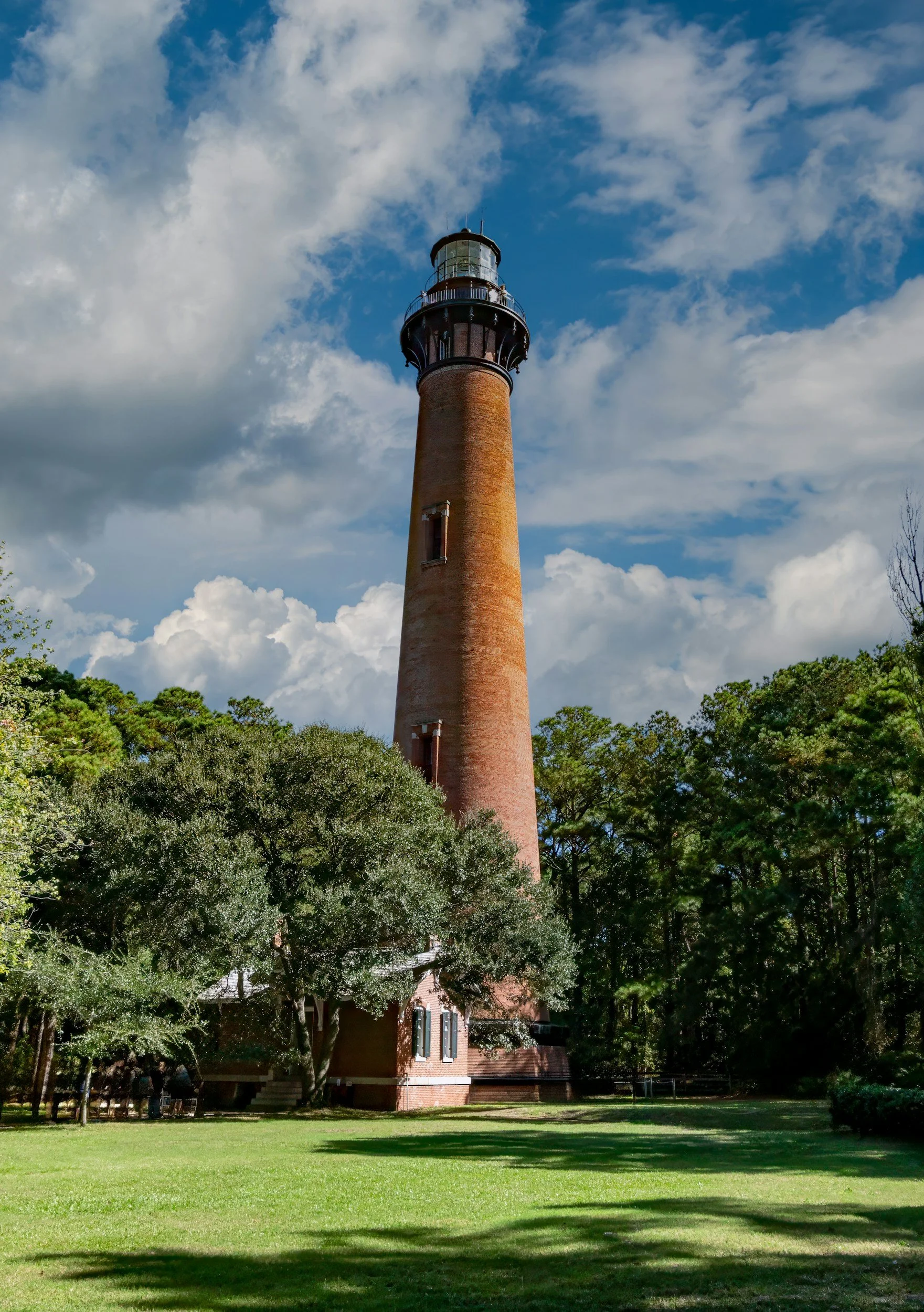
Standing tall against the coastal sky in Corolla, the Currituck Beach Lighthouse is more than just a postcard-worthy landmark—it’s a symbol of maritime history, innovation, and resilience on North Carolina’s northern Outer Banks.
Why a Lighthouse Was Needed
In the mid-1800s, the waters off the Outer Banks were among the most treacherous along the East Coast. Shifting shoals, unpredictable storms, and heavy maritime traffic earned the region the nickname “The Graveyard of the Atlantic.” While other lighthouses dotted the coast, there was a dangerous gap between Cape Henry (Virginia) and Bodie Island. Too many ships were running aground in the dark waters near Currituck.
Local mariners, shipping interests, and government officials pushed for a solution—and eventually, Congress approved funding for a new lighthouse to guide vessels safely past the perilous shoals.
Construction & a Distinctive Design
Completed in 1875, the Currituck Beach Lighthouse was built with function firmly in mind. Unlike many coastal lighthouses that were painted white or striped for visibility, this one was left unpainted, showcasing its natural red brick exterior. That wasn’t an aesthetic choice—it was practical. Leaving the brick bare reduced maintenance costs and set Currituck apart from other lighthouses along the coast.
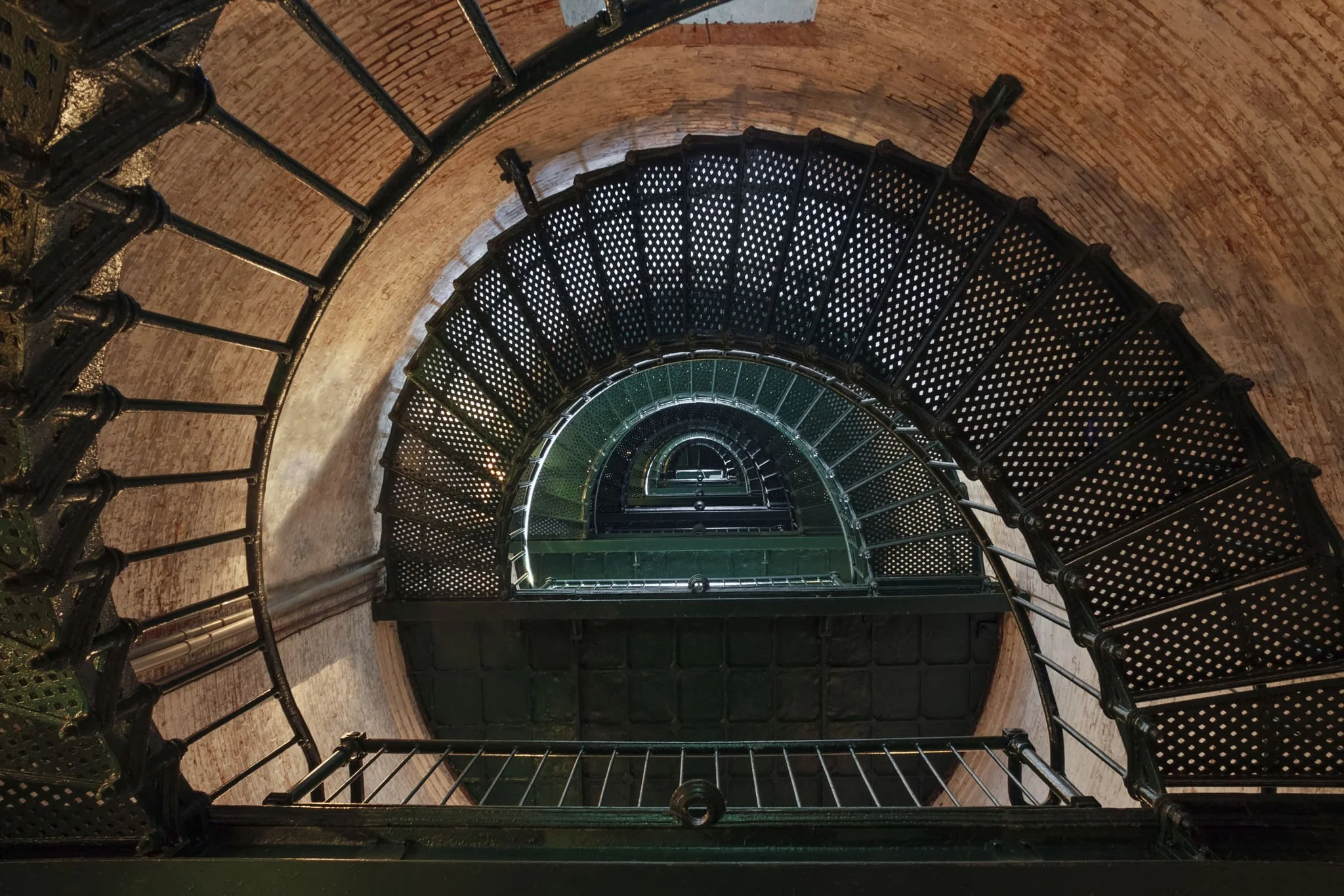
The tower rises 162 feet above the ground, with 220 cast-iron spiral steps leading to the top. When first lit, its powerful first-order Fresnel lens cast a fixed white light visible for nearly 18 nautical miles, serving as a critical navigational aid for passing ships.
Lighthouse Keepers & Life on the Point
For decades, lighthouse keepers and their families lived and worked on site, maintaining the light day and night. Their responsibilities were demanding—cleaning the lens, fueling the lamp, and keeping the light operational through storms and harsh coastal conditions. The surrounding area was remote, accessible mainly by boat or sandy tracks, making daily life both isolated and deeply tied to the rhythms of the sea.
Several original keeper’s buildings still stand today, offering a glimpse into what life was like at the station more than a century ago.
From Deactivation to Preservation
The lighthouse remained in active service until 1939, when advancements in navigation technology made it obsolete. The light was extinguished, and the property was transferred to other uses over time, including service during World War II.
By the late 20th century, preservation efforts gained momentum. In 1995, ownership was transferred to the Outer Banks Conservationists, who undertook extensive restoration. Thanks to their work—and ongoing community support—the lighthouse was reopened to the public, fully restored and once again a proud focal point of Corolla.
The Lighthouse Today
Today, visitors can climb the tower for sweeping views of the Atlantic Ocean, Currituck Sound, and the historic Corolla village below. While the light no longer guides ships, the lighthouse continues to guide something just as important: an appreciation for the Outer Banks’ rich maritime heritage.
It stands as a reminder of the ingenuity required to tame this rugged coastline—and of the generations who depended on its steady glow.
Join me for a tour of the lighthouse, and remember….there’s no better living than Sandbar Living!